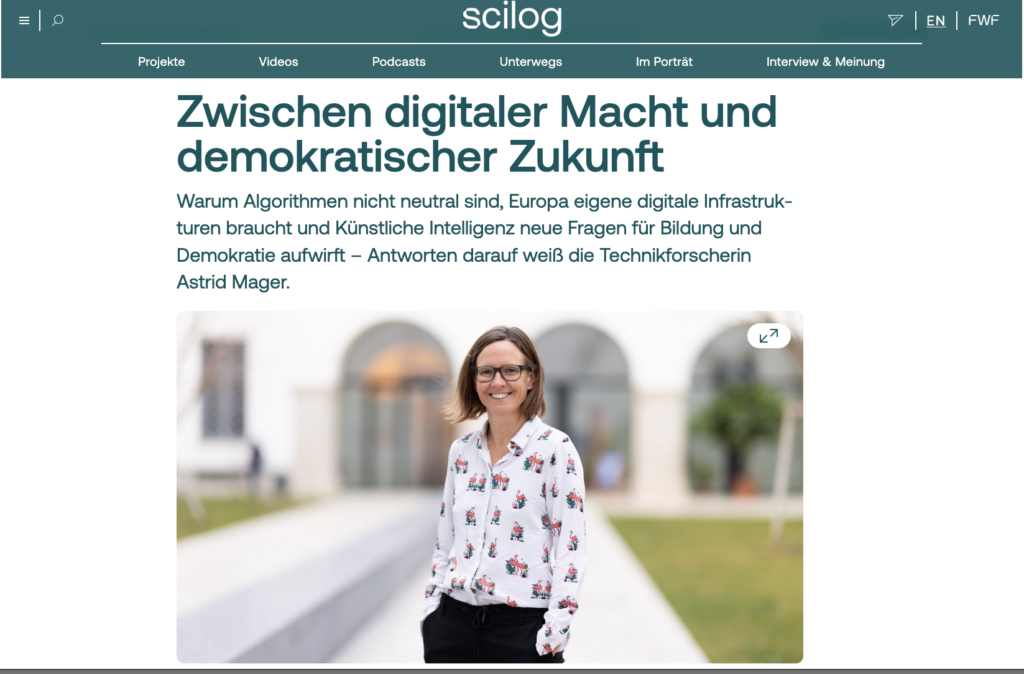
Here is a really nice overview of my work from the Austrian Science Fund! – addressing my Habilitation project on search engines, my research on algorithmic systems in public administration, and AI impacting education and democracy. With a big thank you to Margit Schwarz Stiglbauer/ FWF!
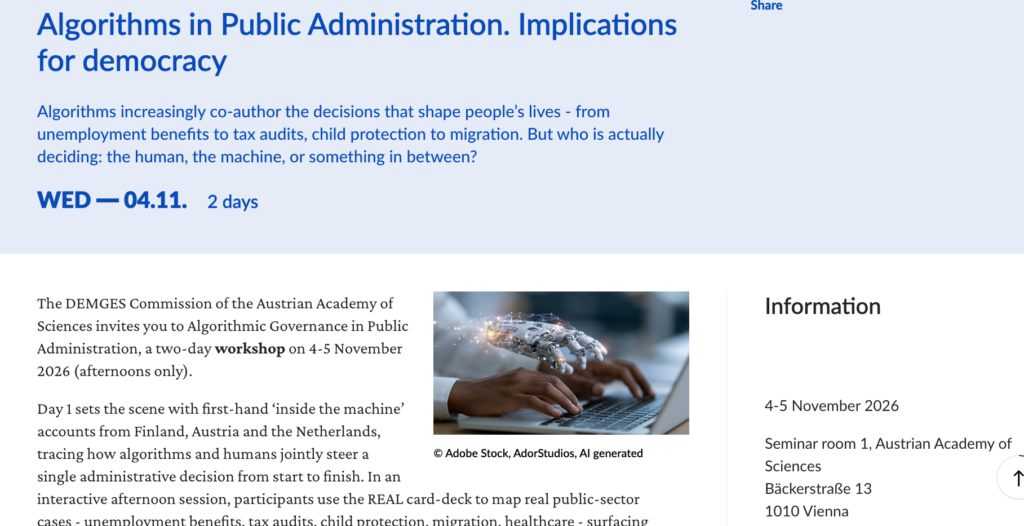
2. We’ll hold a DEMGES workshop on Algorithms in Public Administration from 4-5 November. We’ll bring together international scholars & practitioners to discuss, share, and learn from past experiences with (semi)automated decision-making systems in the NL, Finland, and Austria. One session is co-organized with Tuukka Lehtiniemi (Univ. of Helsinki) using the REAL card-deck in a hands-on workshop, another session is co-organized with Mirko Tobias Schäfer (Data School, Utrecht Univ.) discussing the “Dutch experience” concerned with algorithmic bias & discrimination and which learnings could be drawn from it.
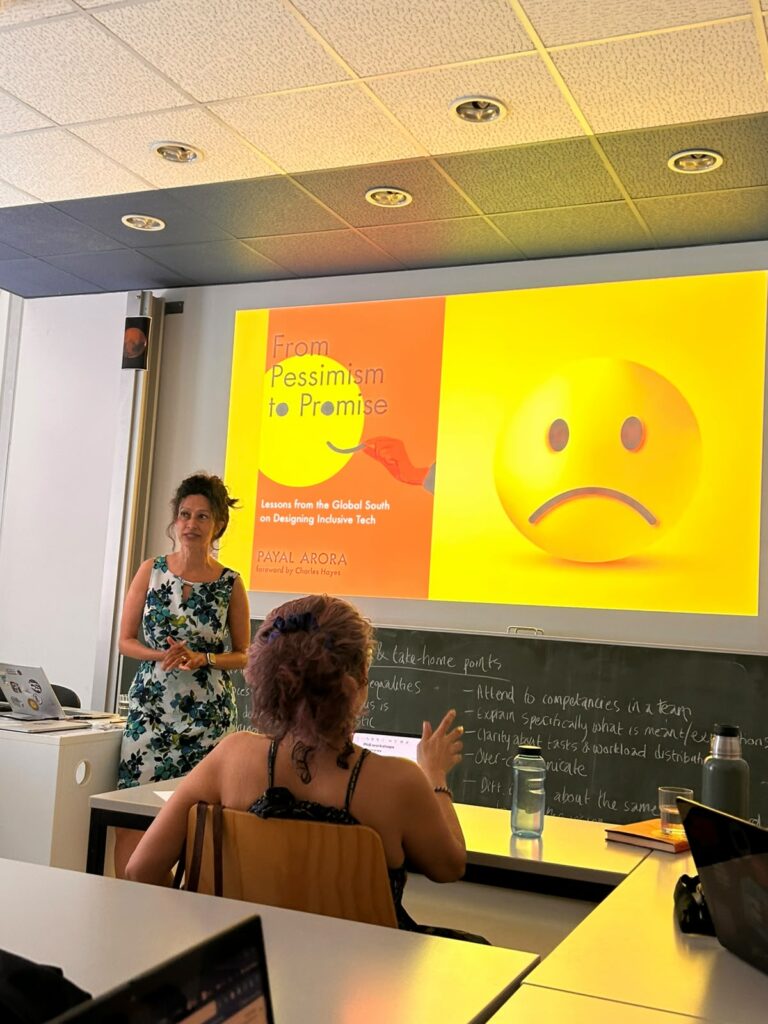
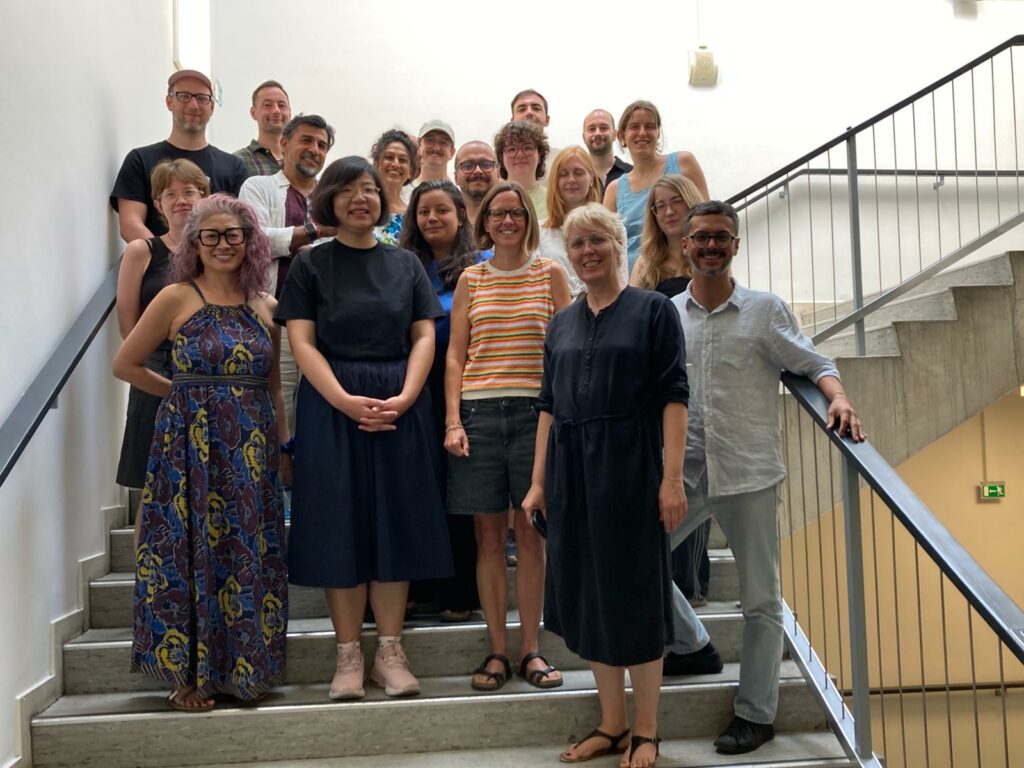
Thanks to all our contributors to the Digital Humanism session From Pessimism to Promise and the PhD workshop at the STS Department! And Katja Mayer, of course! The past days were really inspiring and thought provoking!! Let’s keep up the hopeful spirit! 🙂
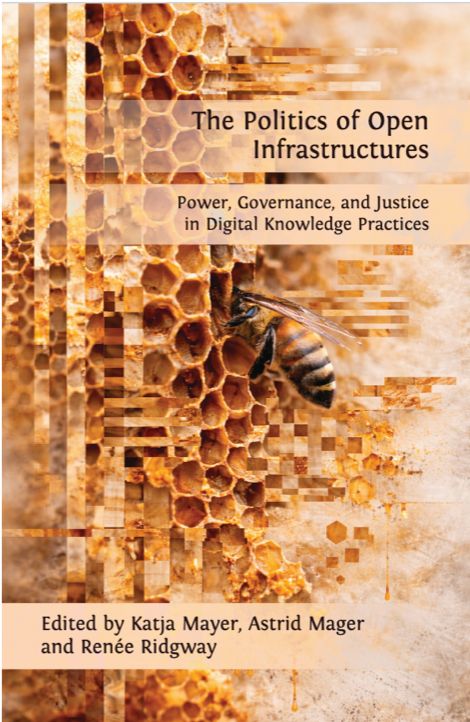
Now that our authors have started to share the news, I also quickly want to say how happy I am that our book “The Politics of Open Infrastructures. Power, Governance, and Justice in Digital Knowledge Practices” is finally out!!! It’s an edited volume put together by Katja Mayer, Renée Ridgway and me that collects theoretical contributions and in-depth empirical case studies on open digital knowledge infrastructures from different countries and contexts! This rich compilation of cases shows the fragility of open infrastructures within the larger corporate digital ecosystem, but also outlines pathways towards more open, participatory, and just digital infrastructures.
A huge thank you to Open Book Publishers for the swift publication process and support throughout! And, most importantly, A BIG THANK YOU to all our wonderful authors for their excellent contributions! – ranging from open internet standards, government data infrastructures, citizen science, community networks, practices of care & repair, to the future of infrastructuring openness:
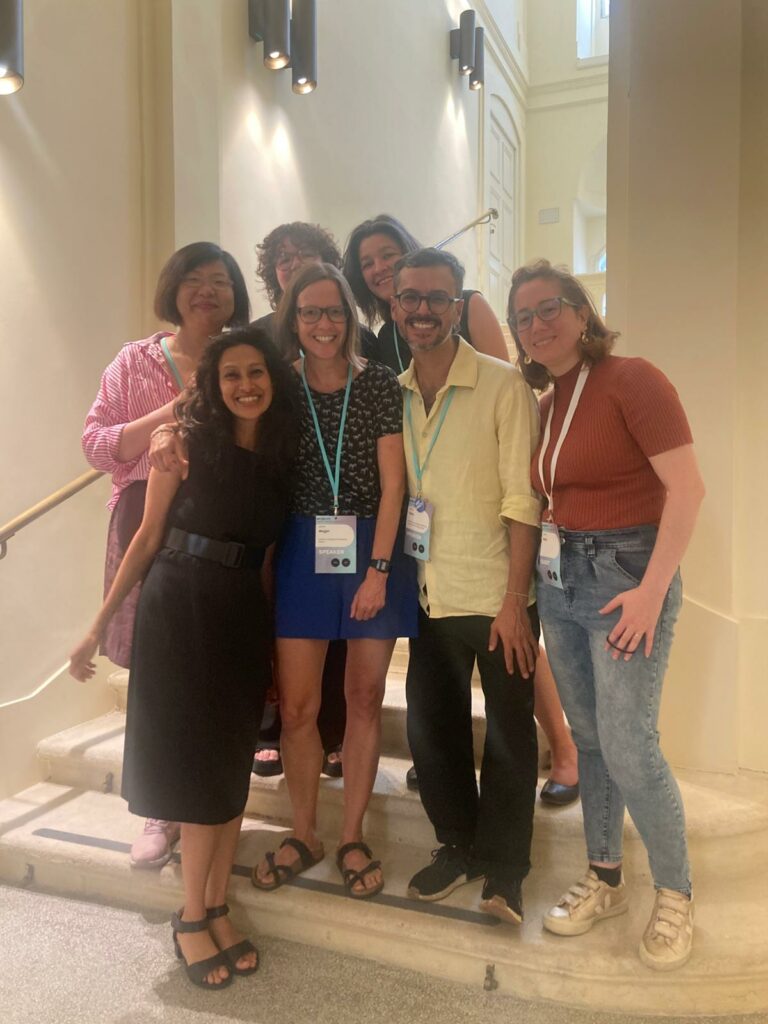
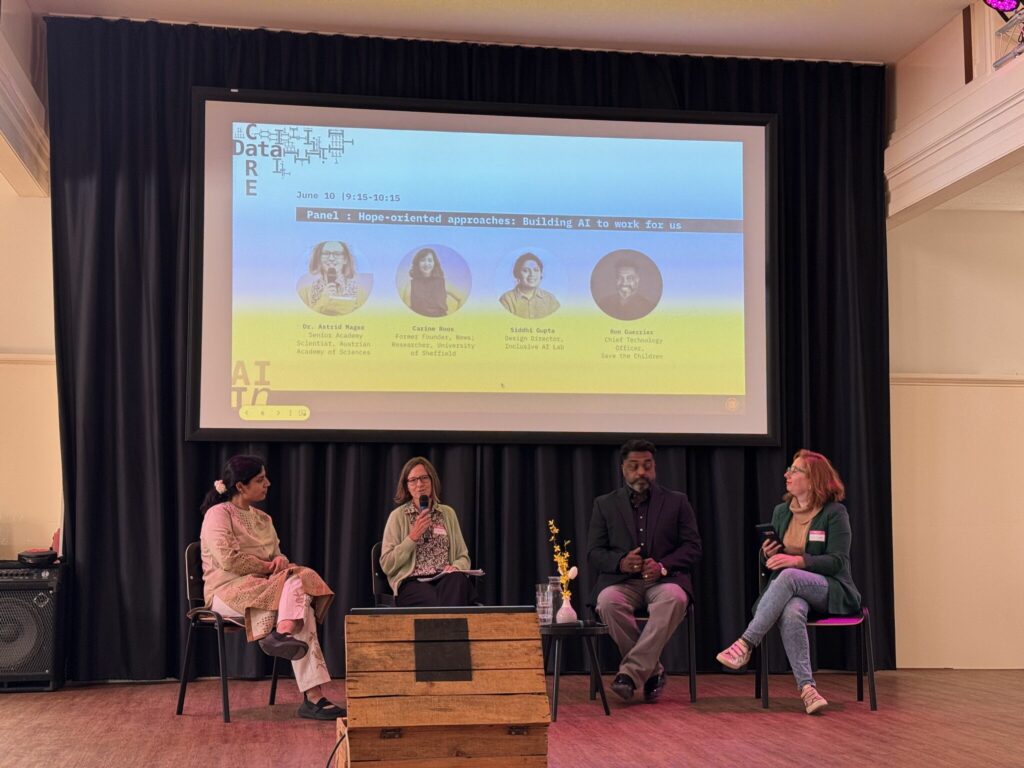
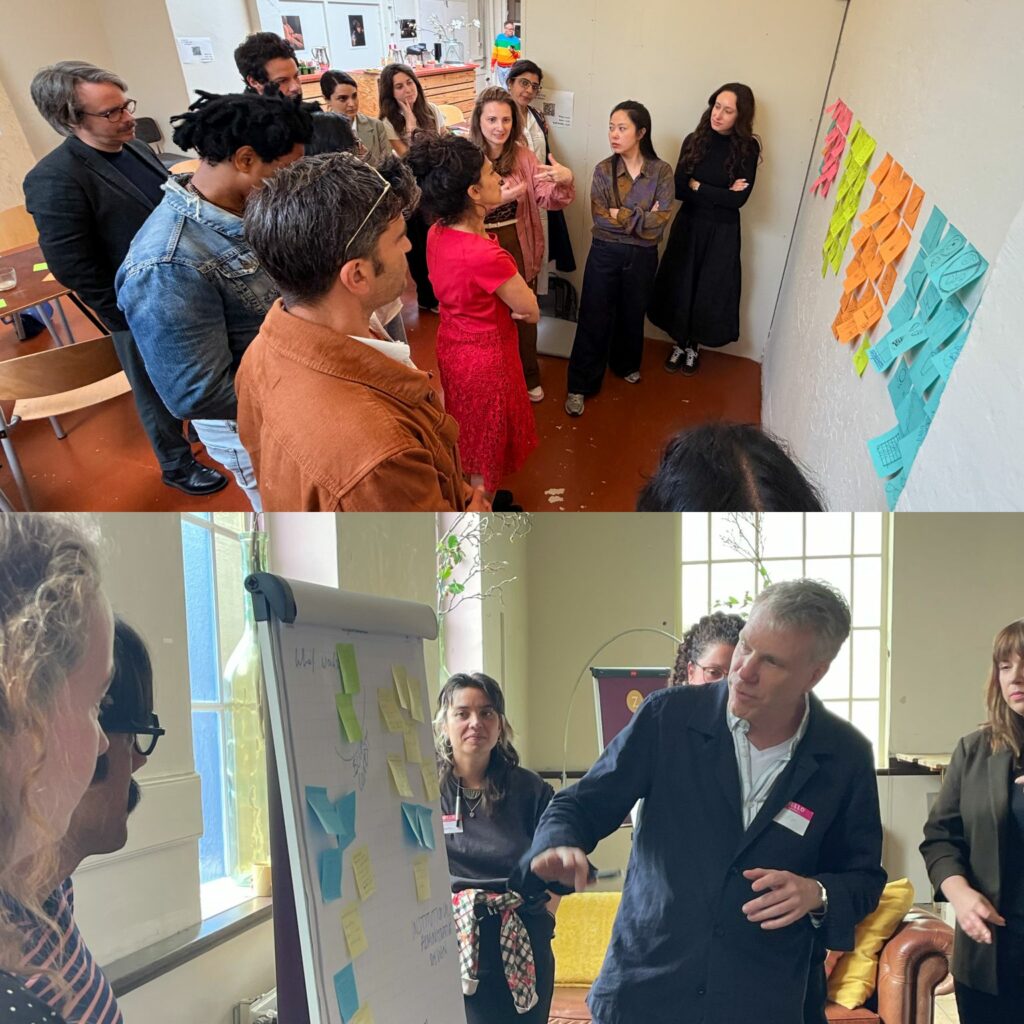
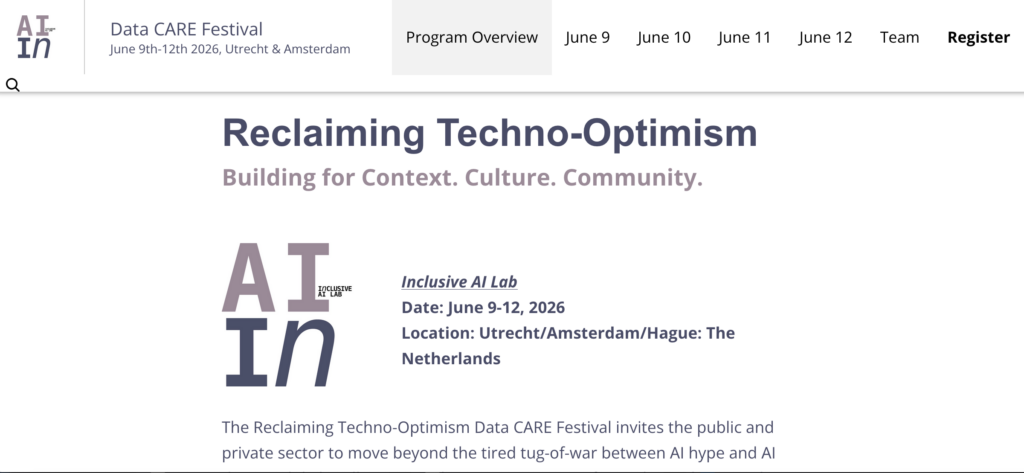
Last week, we had a great gathering organized by the fabulous Inclusive AI Lab, led by Payal Arora. The four-day event was part of the Data Care workshop series and had the motto – and aim – of Reclaiming Tech-Optimism. The Inclusive AI Lab, Utrecht University, follows the main purpose of opening up, diversifying, and reimagining AI together with the Majority world – which was reflected in the diverse set of speakers and audience – ranging from academic scholars, policy advisors, industry, to civil society from all over the world. The colorful exchange consisted of panel discussions, deep-dive workshops, field trips, and lots of interactive parts that made us get to know each other in ways we haven’t experienced so far (especially not in academic contexts) – such as introducing ourselves in ways we haven’t before, asking personal questions or staring in each others’ eyes for 2 (!) min without speaking, or talking to strangers on the street. Having been hesitant at first, I was ultimately surprised by the intimate connections we built and the hopeful vibes that were generated this way.
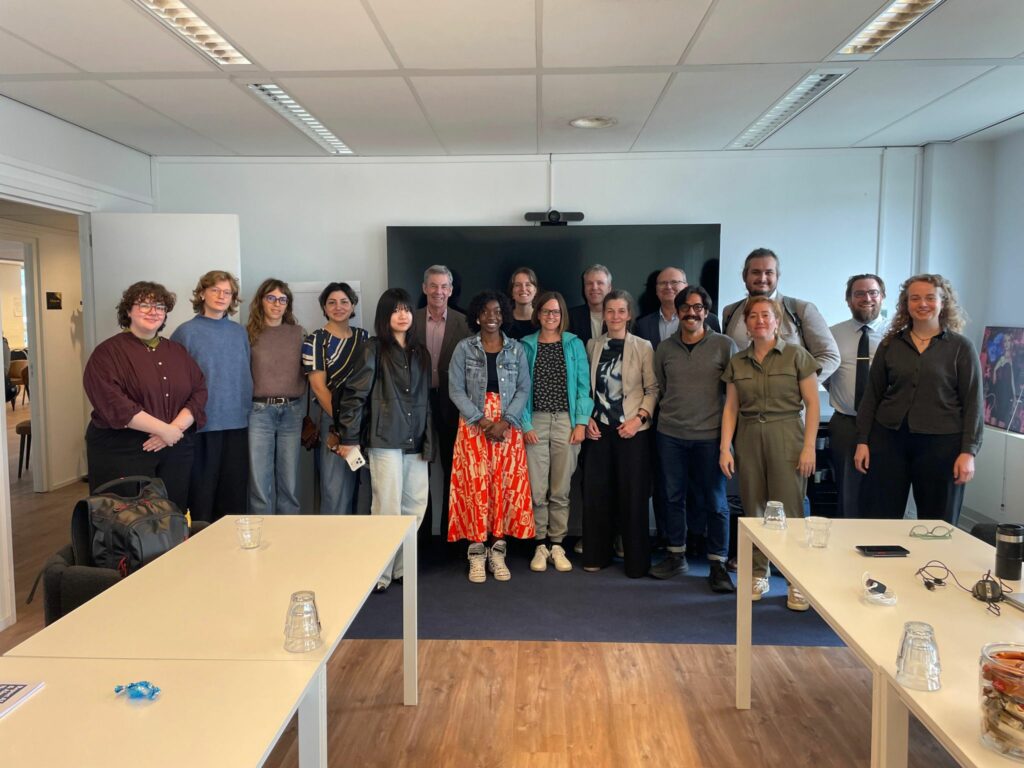
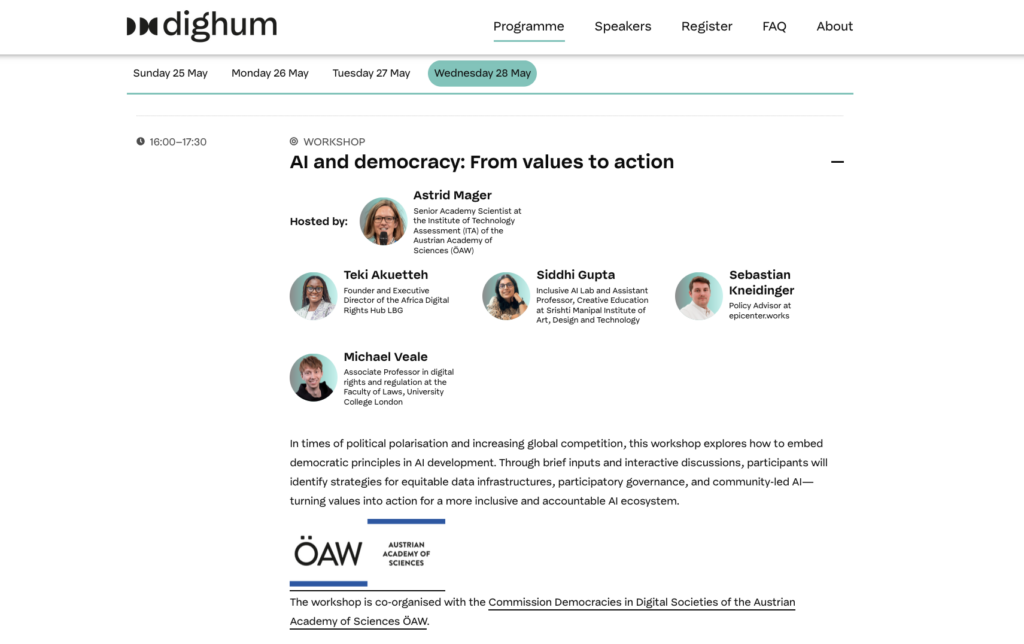
Together with Mirko Tobias Schäfer (Data School, Utrecht Univ.), and the support leads Rana Kuseyri and Constanze Kerres, I organized a workshop on “Situated AI Ethics: How to move from Values to Action” and a field trip to The Hague to visit the Data Protection Authority (DPA) and the Ministry of Labor and Social Affairs to talk about algorithmic systems in welfare states and how the Dutch Government responded to the Childcare Benefits Scandal more particularly (kindly supported by the ÖAW Commission Democracy in Digital Societies). The DPA’s professional and proactive take on algorithmic harm, risk mitigation, and human oversight gives me hope indeed! Two notions that particularly sticked with me were “institutional racism” and “institutional literacy”, which needs to be built on the very top of organizations rather than putting the burden on individuals such as citizens or civil servants. We’re currently collecting and organizing our ideas and planning to write a commentary or opinion piece based on the rich discussions we had – ideally together with some of the workshop participants and their wonderful examples of hopeful AI from different countries, cultures, and institutional contexts.
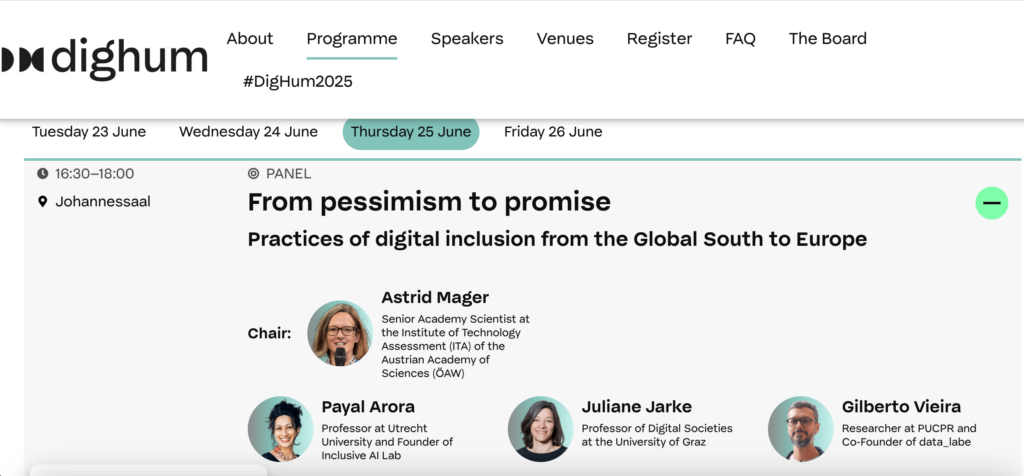
The spirit of hope – From Pessimism to Promise – will also guide our discussions next week that will take place as part of the Digital Humanism Conference in Vienna. First, Katja Mayer and I have organized a PhD workshop at the STS Department to discuss “Alternative Imaginaries of Social Digital Innovation from the Global South to Europe” together with Payal Arora and Gilberto Vieira from data_labe (Rio de Janeiro), as well as PhD students working on AI, policy, and human oversight in different institutional contexts. Second, we’ve organized a panel discussion with Payal, Gilberto, and Juliane Jarke to discuss how to reimagine and rebuild more inclusive digital futures – in Europe and the Global South(s).
I’m already looking forward to exciting days ahead!
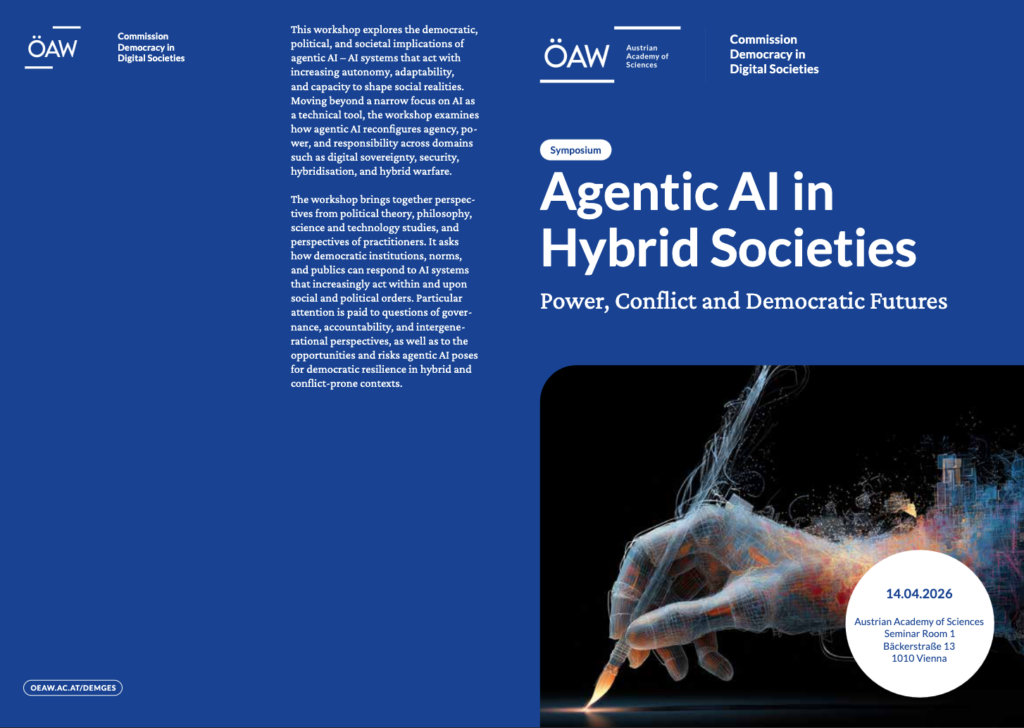
Next week, Barbara Prainsack and I will be holding a symposion on Agentic AI in Hybrid Societies at the Austrian Academy of Sciences (Democracy in Digital Societies; DEMGES). We’ve a fabulous line-up including young speakers from the Studienstiftung – who’ll bring in their perspectives on AI and societal challenges; a voice often overheard in public debate. Topics range from technical foundations of agentic AI, Europe’s digital sovereignty, global health governance, to autonomous warfare. The day closes with a future-oriented panel discussion. We’re looking forward to seeing you there! The full program can be found here.
From 9-12 June, I’m co-organizing a massive AI Festival in Utrecht/ Amsterdam; together with Payal Arora from the Inclusive AI Lab. The festival comprises hands-on workshops, field trips, creative sessions, and a PhD-led day. Together with Mirko Tobias Schäfer from the Data School (Utrecht Univ.), I’ll be leading a workshop on Situated Ethics: From values to action – asking how we could move beyond abstract ethics principles by learning from real-world experiences and expertise; particularly including policy makers, industry, and civil society from the Global South. On the next day, we’ll be moving behind the scenes of AI by visiting the Data Protection Authority and the Ministry of Labor and Social Affairs in The Hague. I’m really looking forward to peeking into the mundane practices of AI use and their – often unintended – side-effects ranging from data bias and discrimination to sociotechnical transformations of work routines – again asking how to practically respond to these developments on the government side; e.g. by creating “ethics officers”. The overall topic of the festival is Reclaiming Techno Optimism. (full program)
Finally, together with Katja Mayer, I’m currently putting together two sessions for the Digital Humanism Conference in Vienna (24-26 June 2026). One of them will feature Payal Arora and Gilberto Vieira from Rio de Janeiro (previously data_labe) – discussing how to move From Pessimism to Promise (Payal’s new book) and what we can learn from Global South perspectives and practices. The program will be out soon!
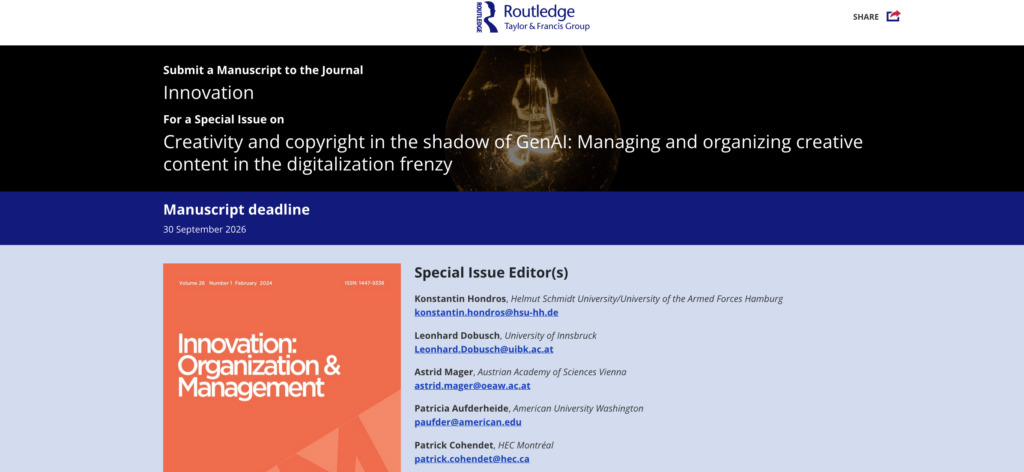
I’m currently co-editing a special issue for the journal Innovation: Organization & Managment on the topic of Creativity & copyright in the shadow of genAI: Managing and organizing creative content in the digitalization frenzy – together with Leo Dobusch, Konstantin Hondros, Patricia Aufderheide & Patrick Cohendet. It’s a journal in organization studies, but we are lookig for contributions from different disciplines & backgrounds – particularly from the Majority World!!
Timeline: We’re looking forward to your abstracts until the 25th of January 2026 – we’ll be holding an online workshop on the 27th of February, for those interested! The deadline for full papers is the 30th of September 2026. Here’s the full descriptionof the special issue!
Two weeks ago, we had a fabulous DEMGES (ÖAW Commission Democracy in Digital Societies) workshop with experts from both the academic and the policy world! The main purpose of the workshop was to discuss our concept of digital hybridization that we’ll submit to Politics & Society soon (led by Jensen Sass). A public lecture by Aris Komporozos-Athanasiou from the Center of Capitalism Studies/ London rounded off the inspiring two-day meeting: The price of truth; an interview with Aris can be found on the ÖAW Website (in German). The next steps of the commission are the plannning of the Democracy Labs to be conducted over the next years.
One Democracy Lab will be carried out in synergy with the Inclusive AI Lab in Utrecht, co-led by Payal Arora. The Inclusive AI lab is dedicated to developing more equitable, participatory, and community-led AI systems – with a particular focus on the Global South; or the Majority World. I’m really proud that I’ll be part of this year’s cohort group – together with lots of inspiring academics, developers, NGOs, and practitioners from around the world! Stay tuned, further DEMGES/ Inclusive AI events & activities will be announced soon!
It has taken some time, but now the book Project Europe. The Making of European Digital Innovation, Policy and Society is finally out! The book is co-edited by Luca Marelli, Jim Dratwa, Gert Verschraegen and Ine Van Hoyweghen and comprises an excellent line-up of authors including Barbara Prainsack, Brice Laurent, and Ulrike Felt (just to name some of them). I’m happy that I’ve contributed a chapter on Digital Europe from Below: Alternative routes to the Digital Decade – here’s the link to the table of contents.